

What you'll learn
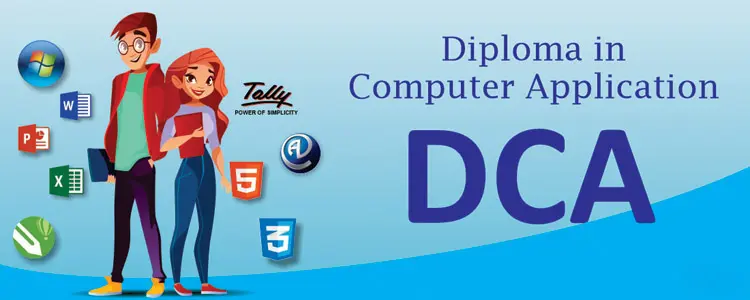
ADCA, or Advanced Diploma in Computer Applications, is a professional diploma course providing comprehensive skills in IT, covering office software (MS Office, Tally), programming basics (C, Java, Python), web design (HTML/CSS), database management, and internet technologies, ideal for students or professionals wanting strong foundational computer skills for roles like Data Entry Operator, Office Assistant, or IT Support. Typically a one-year program after 12th grade, it offers practical training for entry-level IT jobs and career growth in the digital world, with varied duration and fees depending on the institute, notes this page.
Key Aspects of ADCA:
- Full Form: Advanced Diploma in Computer Applications.
- Objective: To build deep knowledge in software, programming, and IT fundamentals for practical application.
- Syllabus Includes: MS Office, Operating Systems, C/C++, Java, Python, Databases, Web Designing, Tally, Networking.
- Duration: Generally 1 year, divided into semesters.
- Eligibility: Usually 12th pass.
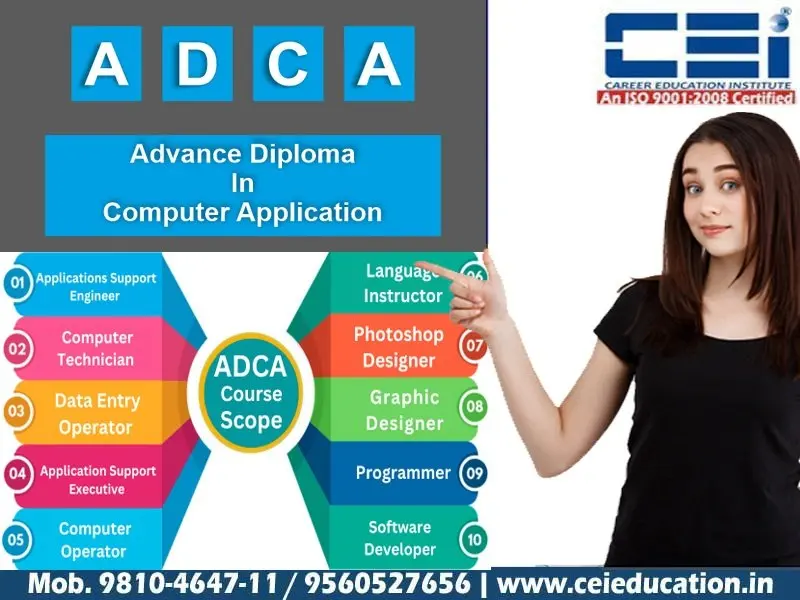
- Career Prospects: Computer Operator, Data Entry Specialist, Office Executive, Junior Web Designer, IT Support, MIS Analyst, notes these snippets https://www.tlfcomputers.com/blog/adca-course https://www.vedantu.com/cuet/adca-full-form.
- Who Should Enroll: Graduates, working professionals, entrepreneurs, and anyone wanting foundational to advanced computer skills for better job prospects or career shifts, says this page.
Show More
Course Syllabus
The ADCA syllabus covers computer fundamentals, operating systems (like Windows and Linux), office applications (such as MS Office and Tally), programming languages (C, C++, Java, Python), web technologies (HTML, CSS, JavaScript), database management, and hardware maintenance. More advanced topics often include software engineering, networking, cyber security, and a final project.
Core topics
- Computer Fundamentals: History, computer architecture, hardware, and software.
- Operating Systems: Windows, Linux/Unix, and DOS.
- Microsoft Office: Word, Excel, PowerPoint, and Access for document creation, data handling, and presentations.
- Programming Languages: C, C++, Java, and Python basics.
- Web Technologies: HTML, CSS, JavaScript, and web development tools.
- Database Management: Introduction to DBMS, SQL, and database design.
- Accounting & Graphics: Basic accounting with Tally and graphic design using software like Photoshop and CorelDRAW.
Advanced and specialized topics